Skip to product information

Seal Small A/C Leaks. Find the Rest with UV Dye.

Seal Small A/C Leaks. Find the Rest with UV Dye.

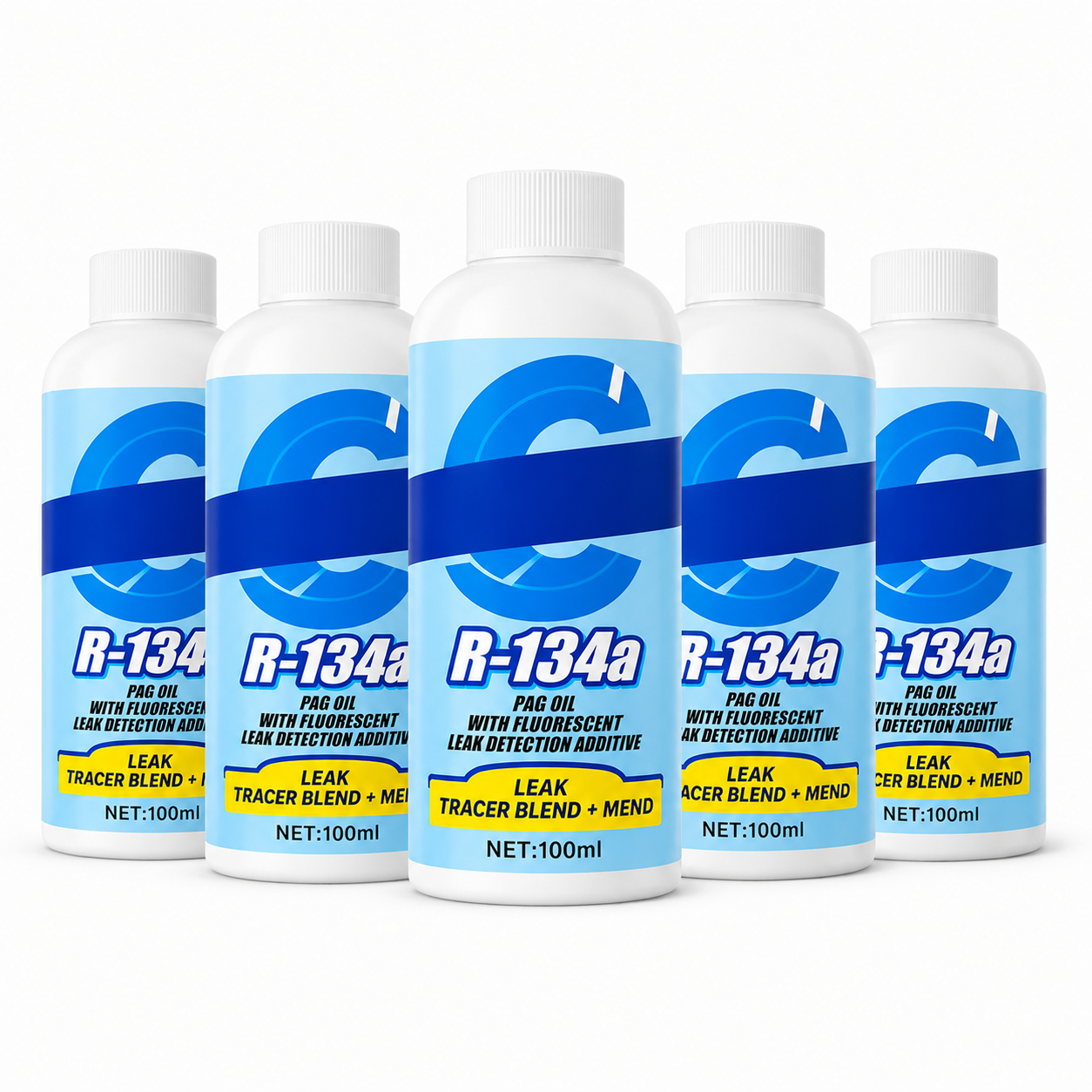
A/C Leak Stop + UV Dye

Seal Small A/C Leaks. Find the Rest with UV Dye.

Helps seal minor leaks from inside the system while fluorescent dye makes remaining leak points easier to locate.

Most Popular
Buy 2, Get 1 Free 3 Bottles ยท Stock Up & Save

Select the option that works best for your vehicle or garage.

 tTrustScore 4.9/13,834 reviews
Regular price $25.99
Regular price $25.99 Sale price $35.98
SAVE 27% Sold out
 

CHOOSE YOUR BUNDLE ๐ŸŽ

Pay with
 
Seal Small A/C Leaks. Find the Rest with UV Dye.

Seal Small A/C Leaks. Find the Rest with UV Dye.

Regular price $25.99
Regular price $25.99 Sale price $35.98
SAVE 27% Sold out
View full details
Automotive air conditioning leak stop with UV dye
๐Ÿ”ฆ UV dye helps reveal remaining leak points under a compatible UV lamp
Automotive A/C Leak Stop + UV Dye

Help Stop Small A/C Leaksโ€”Then See What Is Still Leaking

A dual-action automotive A/C treatment designed to help seal minor leaks from inside the system while leaving a UV-visible trace for easier follow-up inspection.

  • โœ“Helps seal small leaks in suitable metal and rubber A/C components
  • โœ“UV dye helps pinpoint leaks that still require repair
  • โœ“A practical DIY step for slow refrigerant loss and weak cooling
Seal Minor Leaks UV Leak Detection Automotive A/C Use
2-in-1 Formula Leak stop plus fluorescent dye
Inside-Out Action Circulates through the A/C system
Clearer Diagnosis UV glow highlights escape points
Automotive A/C leak stop product and application
One Product ยท Two Jobs

Seal the Micro-Leak. Trace the Bigger Problem.

Slow refrigerant loss can gradually weaken cooling performance. This formula is designed to address minor seepage while the fluorescent dye gives you a visible clue if the system still needs mechanical repair.

โ„๏ธ

Support Colder Air

Reducing small refrigerant leaks can help the system hold its charge and maintain stronger cooling.

๐Ÿ› ๏ธ

Seal from the Inside

The formula circulates through the system to reach suitable leak-prone seals, hoses, and connections.

๐Ÿ”ฆ

Find Remaining Leaks

Escaping fluorescent dye can glow under UV light, helping identify where further repair is needed.

Automotive air conditioning system components
Targets Common Leak Areas

Designed to Reach the Parts You Cannot Easily See

As the treatment circulates, it can travel through the same components where small automotive A/C leaks commonly develop.

O-Rings & Seals Common aging points where slow seepage can begin.
Rubber Hoses Helps address suitable small leaks in flexible lines.
Gaskets Supports minor sealing around joined components.
Evaporator Circulates through the hidden cabin-side heat exchanger.
Condenser Reaches the front-mounted component exposed to road wear.
Metal Connections Helps with small leaks around suitable fittings and joints.
UV dye automotive air conditioning leak detection
How the Dual-Action Formula Works

Seal What It Can. Highlight What It Cannot.

The leak-stop portion is intended for small seepage points. The fluorescent dye continues circulating so a remaining leak can be found visually instead of guessed at.

1

Circulates

The treatment moves with the A/C refrigerant and lubricant through the closed system.

2

Reaches the Leak

It travels toward minor escape points in suitable hoses, seals, O-rings, and fittings.

3

Leaves a UV Trace

Escaping dye can fluoresce under a compatible UV lamp, showing where repair may still be needed.

Using automotive A/C leak stop through the low side port
Simple Installation Flow

Connect to the Low-Side Port, Then Let the System Circulate

Exact installation depends on the product version, applicator, and refrigerant type. Always follow the label included with the product.

1

Verify Compatibility

Confirm the vehicle refrigerant type and that the product or adapter matches the system.

2

Run A/C on MAX

Start the engine and set the air conditioner to maximum cooling so the system circulates.

3

Connect Low Side

Attach the correct applicator to the low-pressure service port and add the treatment as directed.

4

Circulate & Inspect

Let the A/C run, then inspect for fluorescent traces with a compatible UV lamp.

Safety first: Wear eye protection and gloves, work in a ventilated area, never connect to the high-pressure port, and do not overcharge the system.
Know What It Is Designed For

Best for Minor Leaksโ€”Not Major Component Damage

A leak-stop treatment can be useful for slow, small leaks. Larger failures still require professional mechanical repair.

โœ“ A Good Fit For

  • Slow refrigerant loss from small leaks
  • Minor seepage around O-rings, seals, gaskets, or hoses
  • Adding UV dye for easier future inspection
  • Systems whose compressor still runs and circulates

โš  Not a Substitute For

  • Cracked or physically broken A/C components
  • Large, rapid refrigerant leaks
  • A seized compressor or non-circulating system
  • An incompatible refrigerant product or adapter
Automotive A/C leak stop with UV dye product
Restore Confidence in Your A/C

Stop Guessing Where the Refrigerant Is Going

Help seal minor leaks, add UV visibility, and make the next diagnosis faster with one automotive A/C treatment.

โ„๏ธ Helps maintain cooling performance
๐Ÿ› ๏ธ Targets common minor leak areas
๐Ÿ”ฆ UV dye supports accurate inspection
Frequently Asked Questions

Before You Use It

Will this repair every automotive A/C leak?
No. Leak-stop treatments are intended for small, slow leaks. Large leaks, cracked components, damaged condensers, or failed compressors require mechanical repair.
Why is UV dye included?
The fluorescent dye circulates through the A/C system. If refrigerant escapes, the dye can leave a visible yellow-green trace when viewed with a compatible UV lamp.
Where is the product installed?
Automotive A/C treatments are generally introduced through the low-pressure service port using the correct applicator. Follow the product label and vehicle service information.
How do I know whether it fits my vehicle?
Check the refrigerant label under the hood and compare it with the compatibility printed on the product packaging. Different refrigerant systems may require different product versions or adapters.
Do I need a UV light?
The leak-stop portion can circulate without a lamp, but a compatible UV lamp is needed to see the fluorescent dye and locate remaining leak points.

Automotive chemical product. Read and follow the product label, safety data, and vehicle service instructions before use. Refrigerant compatibility and installation method vary by product version and vehicle.